El Niño winter 2026-27: what it means for Sonoma County homes
What forecasters expect, what past strong El Niños did here, and what to do before the rain. Updated October 12, 2026.
What El Niño is, and why it has that name
Every 3 to 5 years, the surface of the tropical Pacific runs warmer than average and the east winds there weaken [13].
That warm water shifts the jet stream and the storm track. NOAA's outlook ties this winter's wetter odds for California to those shifts [3].
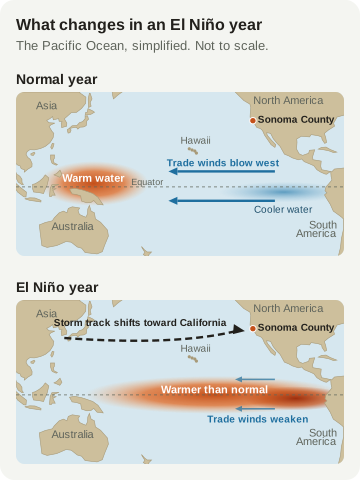
Why "El Niño"? Fishermen on South America's Pacific coast noticed the warm water often showed up around Christmas. They named it El Niño, Spanish for "the boy," after the Christ child [13].
La Niña is the opposite: cooler water and stronger east winds [13].
Where El Niño stands now
As of NOAA's October 8, 2026 update, El Niño is still strengthening [1].
The patch of the Pacific NOAA uses to measure it, called Niño-3.4, was 2.1°C above normal in September [1].
NOAA says this event could beat every El Niño on record back to 1950 [1].
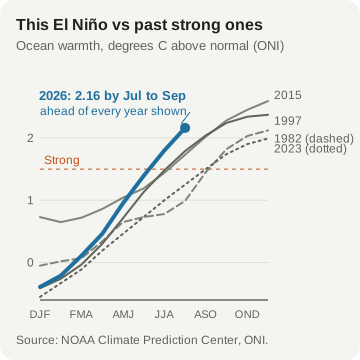
By July to September, this El Niño was already warmer than 1997 at the same point [2].
What forecasters expect this winter
- Wetter odds, not a promise. NOAA's outlook gives California up to a 50 to 60% chance of above normal rain and snow near the coast from December through April [3].
- The south gets the surer bet. Southern California has a stronger chance of a wet El Niño winter than Northern California [6].
- Later is wetter. El Niño's pull on California rain is usually strongest in late winter, not early [6].
- Not every strong El Niño delivers. Of six strong El Niños on record by 2015, only half brought above normal rain statewide: 1957-58, 1982-83 and 1997-98 [7].
What strong El Niños did to the Russian River
We matched NOAA's El Niño record with every big crest at Guerneville since 1951. The details are on our water site, The Downspout.
- 3 of 9 strong El Niño winters since 1951 brought a major flood at Guerneville: 1958, 1966 and 1983.
- That is about twice the rate of all winters since 1951.
- The last three strong El Niños, in 2010, 2016 and 2024, stayed below flood stage.
- The six highest crests since 1951, including the 1986 record, came in other winters.
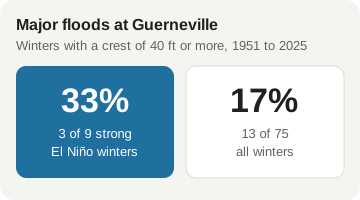
So El Niño raises the odds. It does not decide them.
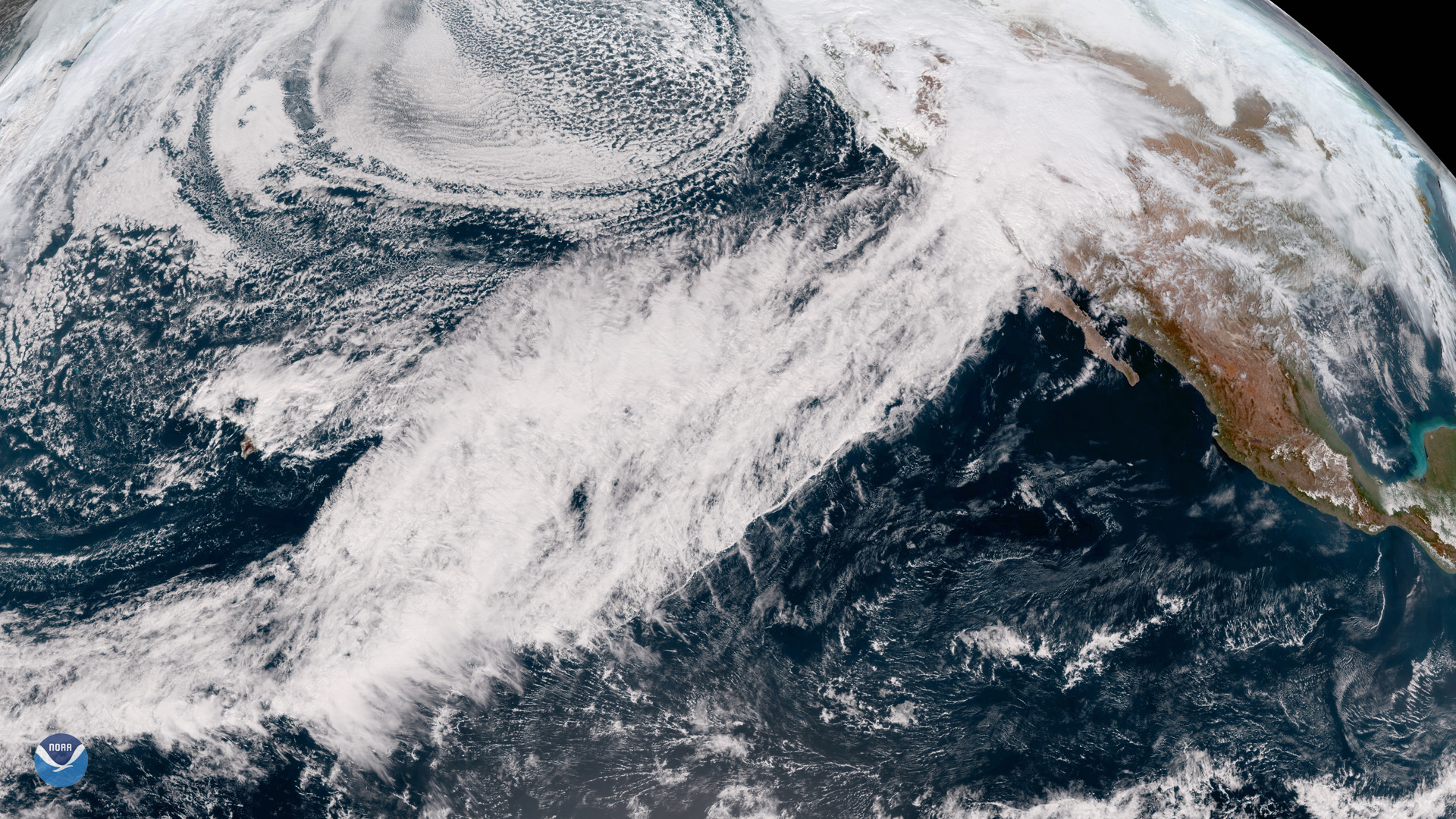
A few atmospheric river storms bring much of the Russian River basin's rain each year [12]. They can come in any kind of winter.
What the state and county are doing

- State, September 21. The Governor declared a statewide emergency to prepare for El Niño. The state is staging sandbags and pumps and has the National Guard ready for flood response [4].
- County, October 6. Sonoma County declared its own emergency. Crews are clearing culverts and flood channels, checking places that have flooded or slid before, and staging sandbags [5].
"The best time to prepare for a flood is before a storm."
Rebecca Hermosillo, chair of the Sonoma County Board of Supervisors [5]
What to do before the rain
- Work through the winter storm checklist. Gutters, downspouts, drains, trees and power.
- Sign up for SoCoAlert with every phone in the house [9].
- Look up your flood risk. Check your address on FEMA's flood maps [11]. The state also asks people to know if they live below a recent burn area [4].
- Decide on flood insurance now. Most homeowners policies do not cover flood, and a new flood policy usually starts 30 days after you buy it [8].
- Know your sandbag station. The county lists them during storms. Bring a shovel [10].
- Plan your route out. Never drive through floodwater [4]. Check the county's road closures map before you drive.
What it means for you
- Treat this as a likely wet winter, not a sure one.
- Do the cheap work in October: gutters, downspouts, drains.
- If you are near the river or a creek, sort out flood insurance and your way out now.
- Check back. We will update this page as NOAA's forecasts change.
Related
Winter storm checklist for Sonoma County homes
El Niño and Sonoma County water: the river, the reservoirs and your rain (The Downspout)
Sources
- NOAA Climate Prediction Center, ENSO Diagnostic Discussion, October 8, 2026.
- NOAA Climate Prediction Center, Oceanic Niño Index (ONI) data.
- NOAA Climate Prediction Center, 90-day outlook discussion, September 17, 2026.
- Office of the Governor, state of emergency for El Niño preparedness, September 21, 2026.
- County of Sonoma, "Sonoma County proclaims emergency, ramps up preparations ahead of potential winter storms," October 6, 2026.
- NOAA Drought Task Force, "What can California expect from El Niño?" (2015 assessment).
- Western Regional Climate Center, "El Niño Impacts and Outlook, Western Region," September 2015.
- FEMA FloodSmart, "Buy a Flood Insurance Policy".
- County of Sonoma, SoCo Emergency, "SoCoAlert".
- County of Sonoma, SoCo Emergency, "Sandbags".
- FEMA Flood Map Service Center.
- Center for Western Weather and Water Extremes (UC San Diego), Forecast Informed Reservoir Operations, Lake Mendocino.
- NOAA, "El Niño and La Niña" (education resources).
- NOAA NESDIS, "Atmospheric River Soaks California," February 15, 2019.
The chart is NOAA data compared by us. The Russian River flood counts are our calculation from NOAA data, explained on The Downspout. Forecasts change: last checked October 12, 2026.