Septic system after heavy rain: what to do in Sonoma County
Your septic system after heavy rain: why soaked ground slows it down, what to do this week, and the signs that mean it is time to call for help.
The short answer
When the ground over your drainfield is soaked, wastewater has nowhere to go [1].
So use less water until the ground dries out [1].
Do not have the tank pumped while the drainfield is flooded or saturated [1].
And watch for the warning signs below. If sewage backs up into the house, stay out of it and call for help [2].
Why heavy rain affects a septic system
A septic system sends wastewater from the tank into a drainfield, where the soil treats it.
The EPA says backup into the home is a risk whenever the water table is high [1]. Extra water from roof drains or sump pumps can also stop the drainfield from treating wastewater [3].
The EPA lists high groundwater near the drainfield as one cause of septic problems [2].
What to do while the ground is soaked
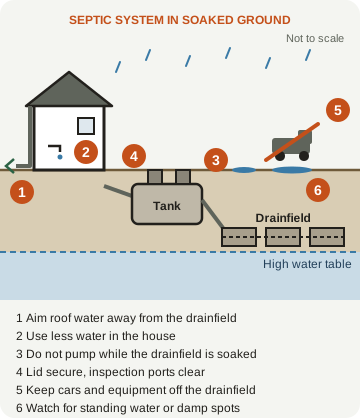
- Aim roof water away from the drainfield [3]
- Use less water in the house [1]
- Do not pump while the drainfield is soaked [1]
- Keep the lid secure and inspection ports clear [1]
- Keep cars and equipment off the drainfield [1] [3]
- Watch for standing water or damp spots [2]
- Cut back on water. This lowers the chance of sewage backing up into the house [1]. Spread laundry over the week instead of doing it all in one day [3]. Fix a running toilet: the EPA says one can waste up to about 200 gallons a day [3].
- Wait to pump. Pumping a tank in saturated soil is a temporary fix at best. It can push the tank up out of the ground or damage its pipes [1].
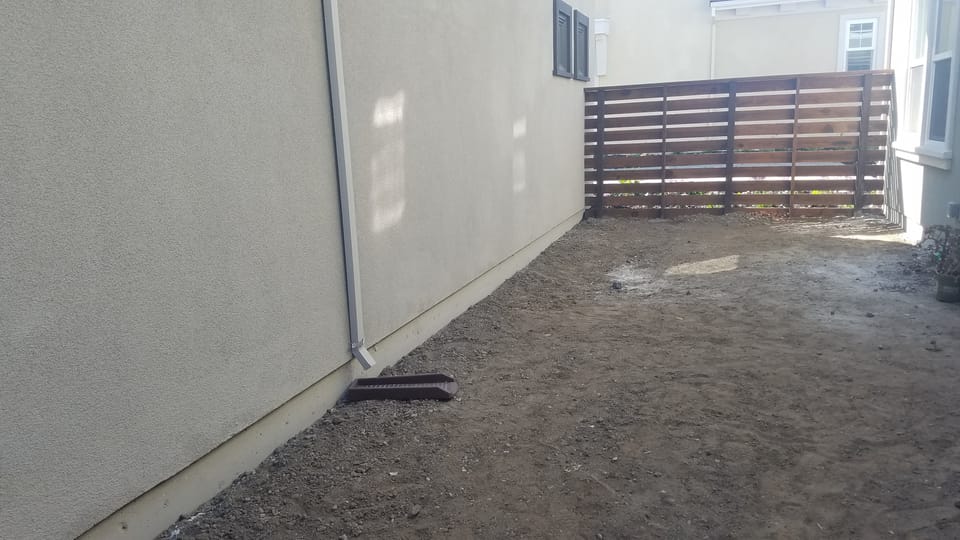
- Keep roof water off the drainfield. Point downspouts and sump pump outlets away from it [3]. Our gutter guide covers keeping downspouts clear.
- Stay off it. Do not drive or park on the drainfield. Saturated soil packs down easily, and that can cause the system to fail [1] [3].
- If the yard flooded, do not use the system until the water over the drainfield drops below the water level around the house [1].
Signs your septic system is struggling
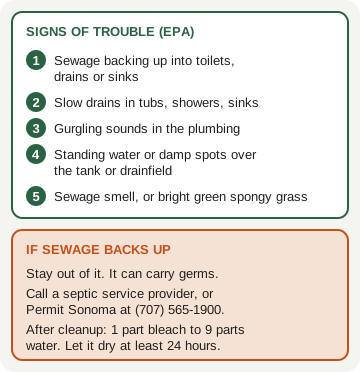
- Sewage backing up into toilets, drains or sinks
- Slow drains in tubs, showers and sinks
- Gurgling sounds in the plumbing
- Standing water or damp spots over the tank or drainfield
- Sewage smell near the tank or drainfield, or bright green, spongy grass over it
Any of these after a storm means the system needs a closer look [2].
Our tip: if wet spots over the tank or drainfield stay after the rest of the yard dries out, or they smell, call a septic professional.
If sewage backs up into the house
- Stay out of it. Sewage can carry germs. Anyone cleaning up should wear protective gear [2].
- Get help. Call a local septic service provider, or Permit Sonoma's well and septic team at (707) 565-1900 [2] [4].
- Clean and dry. After cleanup, wash tools and clothes, and disinfect the area with a mix of 9 parts water to 1 part household bleach. Keep it out of use until it has been dry for at least 24 hours [2].
- Leave the tank to the pros. Septic tanks can hold dangerous gases. Only trained specialists should clean or repair them [1].
After the storm passes
- Have it inspected if you suspect damage, such as settling, or a system that will not accept water [1].
- Check pumps and wiring first. If your system has a pump or other electrical parts that got wet, have the connections checked before you turn the power back on [1]. A power outage can also stop a pump. See our power outage checklist.
- Repair erosion. Fill washed-out spots and reseed or sod the ground over the tank and drainfield [1].
- On a well? If floodwater reached your well, do not drink the water until it has been tested [1]. The Downspout explains what to test a Sonoma County well for, and where.
Get ready before the next storm
- Know where your tank and drainfield are. You cannot keep water and cars off a drainfield you cannot find. Our tip: mark the corners with a stake or a small flag.
- Keep up the schedule. The EPA says to have a typical household system inspected at least every three years, and the tank pumped every three to five years. Systems with mechanical parts usually need a yearly inspection [3]. Permit Sonoma also says pump every 3 to 5 years, depending on use [4]. To find your own number from tank size and household, try The Downspout's septic pumping calculator.
- Non-standard system? Permit Sonoma requires owners of non-standard systems to take part in its operational permit monitoring program, and publishes maintenance guides for them [4].
- Fix the roof water on a dry day. If a downspout empties toward the drainfield, redirect it before the next storm [3].
Who this applies to
- Homes on a septic system, which is the rule where public sewer is not available [4].
- Homes in low spots, near creeks, or with a drainfield downhill of the roof runoff.
- Homes with a private well, if floodwater reached the wellhead [1].
- If you are on city sewer, this page does not apply. A backup there is a matter for your plumber or sewer agency.
Related
- When to clean your gutters
- Sonoma County sandbags
- Landslide warning signs
- Power outage checklist
- Home Ready Sonoma
Sources
- U.S. EPA: Septic Systems, What to Do after the Flood (do not pump while saturated, reduce water use, backup risk with high water table, no driving on saturated soil, inspection, specialists only, electrical check, erosion, well testing; last updated August 24, 2026; read November 16, 2026)
- U.S. EPA: Resolving Septic System Malfunctions (causes including high groundwater, warning signs, sewage backup steps, 10% bleach mix, 24 hours dry; last updated March 11, 2026; read November 16, 2026)
- U.S. EPA: How to Care for Your Septic System (roof drains and sump pumps away from the drainfield, no parking, running toilet, laundry, inspection and pumping intervals; last updated August 17, 2026; read November 16, 2026)
- Permit Sonoma: Septic Systems / Onsite Wastewater Treatment Systems (septic where no public sewer, pump every 3 to 5 years, operational permits for non-standard systems, maintenance guides, phone (707) 565-1900; read November 16, 2026)
- National Weather Service, San Francisco Bay Area (November 14, 2026 snapshot: saturated soils after recent rain)