Zone 0 rules in Sonoma County
Where the rules stand, and what to do in the first 5 feet around your home.
What Zone 0 is
Zone 0 is the ember-resistant zone: the area from your home out to 5 feet. It is measured from the exterior wall, roof, attached deck, stairs or pergola, or to the property line if that is closer. The idea is simple. Nothing that can catch an ember and burn should sit against your home.
What the approved rules would require
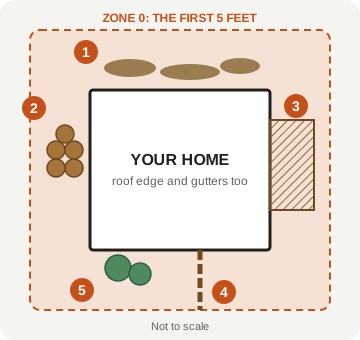
- Bark mulch and leaves against the walls and roof edge
- Firewood stacked near the house
- Under the deck: stored items and plants
- A wood fence that touches the house
- Shrubs and dead branches against the wall
- Remove combustible mulch, wood chips, leaves, needles and bark.
- No firewood stored in the zone.
- Clear vegetation and stored items from under decks, balconies, pergolas and stairs.
- No combustible fence or gate attached to the home. Attached fencing needs a 5-foot noncombustible section.
- No new combustible fencing inside the zone.
- Keep roofs and gutters clear.
- Remove dead or dying branches and ladder fuels.
- Limited, maintained plants that are not woody may be allowed if they meet height, spacing and container standards.
- An outbuilding under 120 square feet may sit in the zone only if it is entirely noncombustible.
Who it would apply to
In a State Responsibility Area, the rules apply to buildings regardless of hazard rating. In a Local Responsibility Area, they apply only to occupied structures in locally designated Very High Fire Hazard Severity Zones. Many homes in unincorporated Sonoma County are in a State Responsibility Area, but not all. Look up your address before you assume.
Even if the rule does not cover your home
Insurers look at the same first 5 feet, wherever you live. They rate wildfire risk with their own models, not the state's maps. California requires them to offer discounts for a 5-foot ember-resistant zone (Department of Insurance), and the IBHS Wildfire Prepared Home designation, which some insurers now require for new policies in high-risk areas, requires one too (rate filings, January 2026). What insurers look for.
Local rules in Sonoma County
In unincorporated Sonoma County, the county's vegetation rules (Chapter 13A) already apply, and inspectors check homes in at-risk areas starting in late spring. Cities can have their own rules. (Permit Sonoma, inspections)
If the rules take effect as approved, requirements for existing homes would phase in over three to five years. Requirements for new structures wait on updated Board of Forestry guidance.
What to do now
You do not have to wait for the rules to be final. These steps count for insurance discounts now, and they get you ahead of the rule.
- Rake and remove leaves and needles from against the house, the roof edge and the gutters.
- Replace bark and wood chip mulch near the walls with gravel or stone.
- Move firewood and other burnables away from the house.
- Clear everything stored under decks and stairs.
- Walk the fence line where it meets the house and note any wood that touches the wall.
Sources
- California Office of Administrative Law: emergency regulations under review (filing status)
- California Department of Insurance: Wildfire Safety and Insurability briefing (March 2026)
- Permit Sonoma: vegetation management requirements (Chapter 13A)
- Insurance for Good: do California insurers reward wildfire resilience? (analysis of rate filings, January 2026)
- Best Best & Krieger: Board of Forestry adopts emergency Zone 0 regulations under AB 3074 (what the rules say)