Power station or generator? Backup power for Sonoma County outages
How much you need, which kind fits your house, and the models worth a look.
We don't earn anything from the links on this page. If that changes, this note will say so.
- Short outages: a power station of about 1 kWh. It runs the fridge for about 14 hours, or phones, Wi-Fi and lights for about a day. Quiet, safe indoors, no gas.
- Two days with the fridge on: about 5 kWh of battery, a smaller one plus solar, or a generator.
- A well pump: a generator or big battery with 240 volts, wired in by an electrician.
- PG&E pays up to $300 toward a generator or a battery up to 1,000 Wh, like EcoFlow's RIVER 2 Pro, if your address qualifies, until December 31, 2026 [1].
How much backup power do you need?
Tick what you want to keep running. You get the size to shop for.
Estimates. The label on your appliance beats our number. Method and sources below the tool.
Power station or generator?
Most homes here land in one of three places.
| Power station | Inverter generator | Standby generator | |
|---|---|---|---|
| What it is | A big rechargeable battery with outlets | A quiet gas engine with outlets | A fixed unit outside, wired to your panel |
| Indoors? | Yes | Never. 20 feet from the house [2] | Outdoors, installed by a pro |
| Fuel | None. Recharge from the wall or solar | Gas, some also propane | Natural gas or propane |
| Well pump? | Only big 240 V models, wired in | Only with a 240 V outlet, wired in | Yes |
| Upkeep | Top up the charge every few months | Oil, fresh gas, a test run | Yearly service |
| Cost | About $450 to $750 for 1 kWh. $2,800 and up for 240 V | About $2,900 for Honda's California model | From about $4,600, plus $1,500 to $5,000 to install, plus permits |
Our take. Start with a 1 kWh power station. It covers the fridge overnight, or the small stuff for about a day. If your outages run for days, size up with the tool above, or add a generator.
Why outages here run long
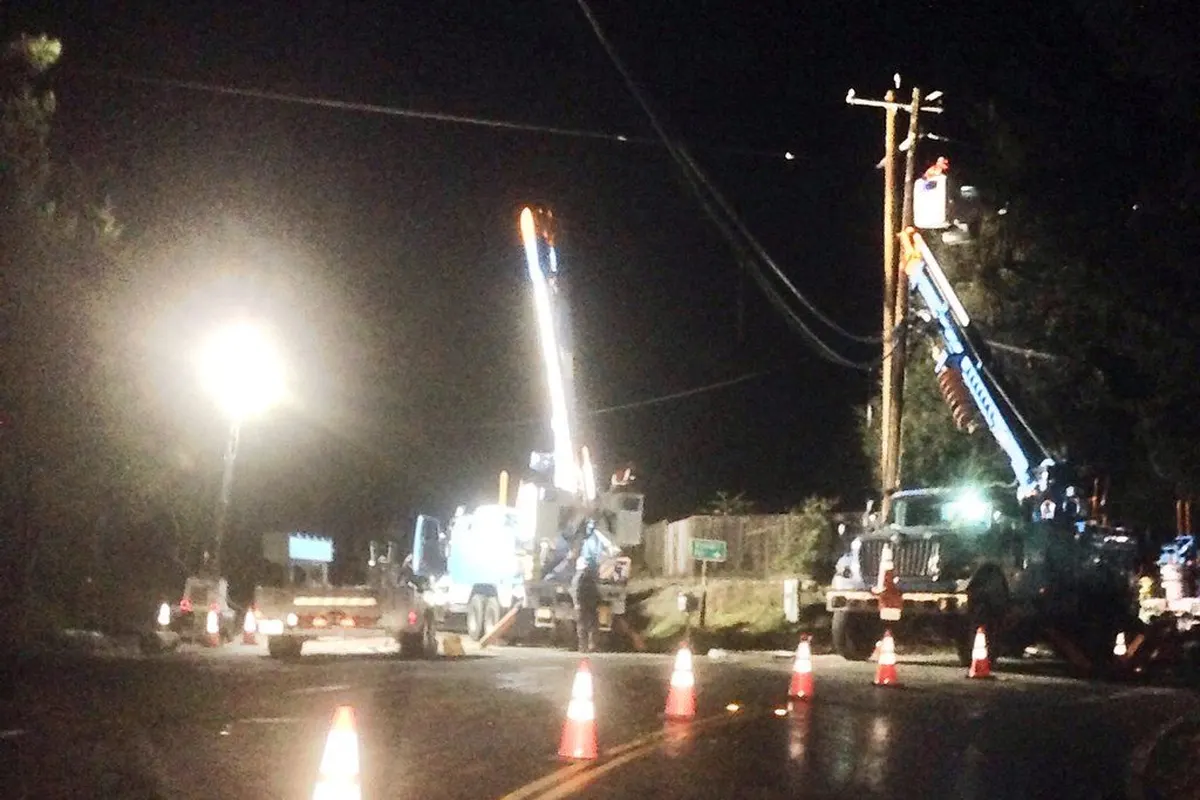
- Storms and trees. After a February 2024 storm, about 15,800 North Bay PG&E customers were still out three days later [3].
- Fire season shutoffs. PG&E turns power off ahead of dry, windy weather. See our power outage checklist.
- Fire safety settings. Some lines run on PG&E's EPSS settings, which can mean extra outages [4]. Homes on those lines can get the rebate below [1].
- This winter may be wet. See our El Niño guide.
Models worth a look
Prices are from each maker's own site on October 17, 2026. Sale prices change often. Product photos are from the makers' sites too.
About 1 kWh: the basics through a night
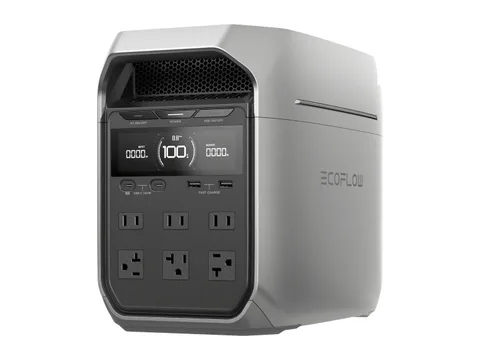
Our pickEcoFlow DELTA 3 Plus
1,024 Wh · 1,800 W · adds batteries up to 5 kWh · 27.6 lb · $719
Room to grow. Start with one battery and add more later. Takes up to 1,000 W of solar.
Sold out right now, with pre-orders shipping mid-November. EcoFlow
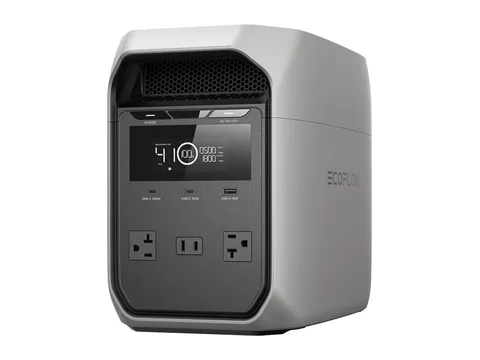
EcoFlow DELTA 3 Classic
1,024 Wh · 1,800 W · $449 to $499
Same battery size for less, if you can't wait for the Plus. Skip it if you might want more battery later. EcoFlow
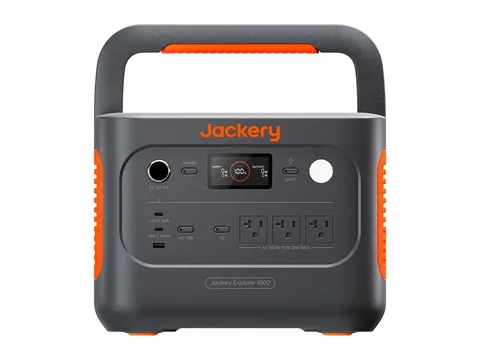
Jackery Explorer 1000 v2
1,070 Wh · 1,500 W · 23.8 lb · $519
The lightest here. It can't add batteries. Jackery
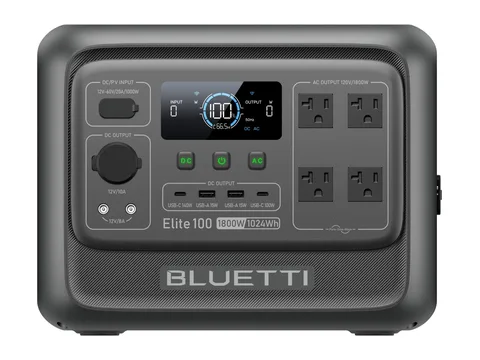
Bluetti Elite 100 V2
1,024 Wh · 1,800 W · 25 lb · $499
Takes up to 1,000 W of solar for its size. Bluetti
All four hold a bit more than PG&E's 1,000 Wh rebate limit, so they don't qualify [1].
Rebate size: under 1,000 Wh
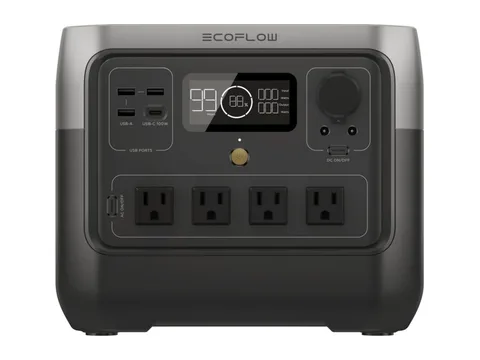
PG&E's list also names models from Anker, Bluetti, Goal Zero and Jackery. Any battery from 290 to 1,000 Wh can qualify [5].
2 kWh and up, and 240 volts for a well pump
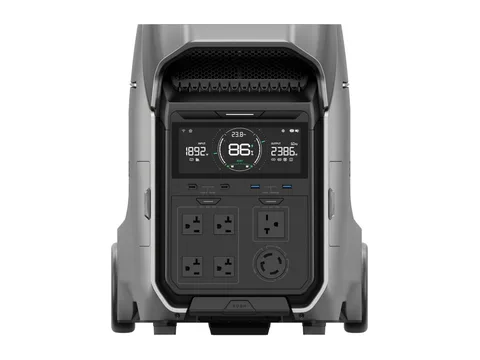
Our pickEcoFlow DELTA Pro 3
4,096 Wh · 4,000 W at 120 or 240 V · adds batteries up to 48 kWh · 113.5 lb · $2,799
Big enough for a well pump on 240 volts. EcoFlow sells it with a transfer switch for $3,049. An electrician installs the switch. EcoFlow
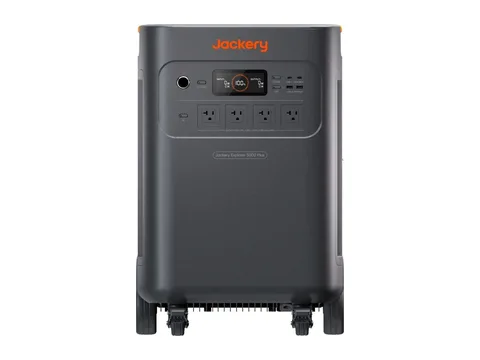
Jackery Explorer 5000 Plus
5,040 Wh · 7,200 W at 120 or 240 V · 134.5 lb · $3,499
More battery and more power, at more weight. Jackery
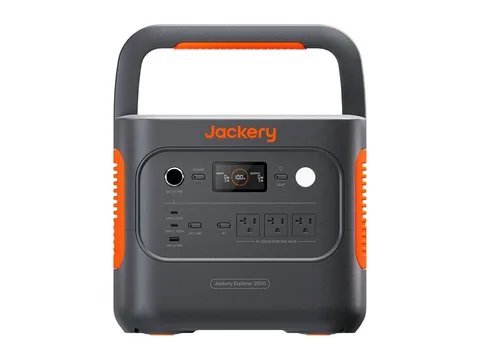
Jackery Explorer 2000 v2
2,042 Wh · 2,200 W · 120 V only · 39.5 lb · $899
Runs a fridge for a little over a day. No well pump. Jackery
Whole-house battery
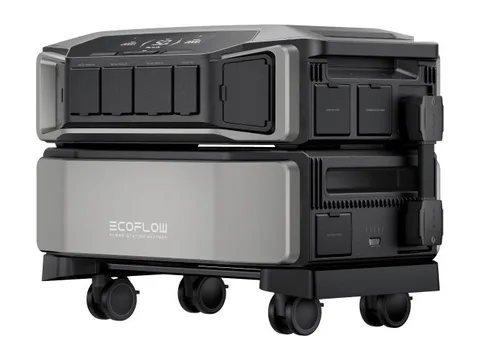
Wired-in home batteries from solar installers are another route. The SGIP rebate below can cover most of the cost for some homes [7].
Gas generators: check California first
Many popular gas generators say "not for sale in California" because of the state's clean air rules for small engines [8]. Honda's EU2200i is one [9]. Look for "CARB compliant" before you buy. A generator you already own is fine to keep using [10].
Our pickHonda EU3200iAC
2,600 W running · 1.2 gal · 8.6 hours at a quarter load · 54 to 58 dB · $2,899
The California version of Honda's mid-size inverter. Quiet, with a CO shutoff [11]. Enough for a fridge, freezer, furnace fan and lights. It puts out 120 volts only, so it won't run most well pumps. Honda
On a 240 volt well pump, you need a generator with a 240 volt outlet that starts your pump size, from 1,200 W for the smallest pumps to 4,000 W for pumps just under 2 hp [12]. Ask the seller to confirm it is CARB compliant.
Standby generator
Extras worth buying
- Battery CO alarms on every level. Any gas engine near the house needs them [14][2].
- A heavy-duty outdoor extension cord, rated for at least the load you plug into it [15].
- A generator tent rated for running in the rain, such as GenTent's inverter kit ($164.99). Check your generator's manual first [2][16].
- Folding solar panels to top up a power station during a long outage. Match them to the station's solar input.
- A transfer switch or inlet, installed by a licensed electrician, if you want to run wired-in things like the well pump or furnace [17].
Rebates and free help
- PG&E Generator and Battery Rebate. Up to $300, plus up to $200 more on CARE or FERA. Your address must be in a high fire-threat area or on an EPSS circuit. Batteries must hold 290 to 1,000 Wh. Generators must be on PG&E's list and CARB compliant. Apply within 12 months of buying, and by December 31, 2026 [1].
- PG&E Portable Battery Program. Batteries for people who rely on powered medical devices. Full for 2026 [4].
- PG&E Medical Baseline. For homes that rely on powered medical devices. You get extra warnings before a planned shutoff, by call, text or a ring at your door [18].
- Home batteries through SGIP. The state's program can pay most of the cost of a wired-in battery for some homes: high fire-threat areas plus medical needs, wells or low income [7]. Funding comes and goes. Ask the installer what is open.
Running it safely
- Gas generators outdoors only, 20 feet from the house. Not in the garage, not on the porch, not in the carport. Point the exhaust away [2].
- Buy one with a CO shutoff. About 100 people a year in the U.S. die from generator CO. Models certified to the newer safety standards (PGMA G300-2018 or UL 2201) are estimated to cut those deaths by 87% to 100% [2].
- Never plug a generator into a wall outlet. That is called backfeeding, and it can kill a line worker down the road [15][17].
- On a well? Keep fuel and refueling 50 feet from the wellhead, per the state water board. See The Downspout's guide for well owners.
- Let it cool before refueling, and store gas in approved cans away from the water heater [15].
What it means for you
- A night without power: a 1 kWh power station, charged and ready.
- Days without power, or a well: size up with the tool, or add a generator.
- Check PG&E's rebate before you buy. It ends December 31.
- Own a generator already? Run it now, before the first big storm.
Related
How we sized it
- Energy per day = watts × hours used, the Department of Energy's formula [19]. A fridge runs about a third of the time [19].
- Watts for the fridge, freezer, TV, microwave, coffee maker, furnace fan, sump pump and heater come from Honda's wattage list [20]. Motors can draw up to 3 times their running power to start [15].
- Well pump power by breaker size comes from Oakville Pump Service in Napa County [12].
- Phones, Wi-Fi, LED lights and laptops are our estimates. CPAP uses the rating of a common machine's power supply [21].
- Batteries deliver about 85% of their rated capacity once the inverter takes its cut, Jackery's rule of thumb [22].
- Generator fuel is by the hour, from Honda's run times for the EU3200i: 1.2 gallons lasts 8.6 hours at a quarter load and 3.3 hours at full load [11]. We scale between the two by your average load.
Sources
- PG&E, Generator and Battery Rebate Program
- U.S. Consumer Product Safety Commission, winter weather safety tips, January 3, 2025
- CBS News Bay Area, outages three days after the storm, February 7, 2024
- PG&E, Portable Battery Program
- PG&E, examples of eligible portable batteries (PDF)
- EcoFlow, Smart Home Panel 2
- Center for Sustainable Energy, SGIP Equity Resiliency
- California Air Resources Board, Small Off-Road Engines
- Honda Power Equipment, EU2200i
- California Air Resources Board, SORE regulation FAQ (PDF)
- Honda Power Equipment, EU3200i
- Oakville Pump Service, How much power does my submersible well pump use?
- HomeAdvisor, standby generator cost, updated June 2026
- Ready.gov, Power Outages
- American Red Cross, Safe Generator Use
- GenTent, Inverter Kit
- PG&E, Electric Generator Safety (PDF, hosted by FIRESafe MARIN)
- PG&E, Medical Baseline Program
- U.S. Department of Energy, Estimating Appliance and Home Electronic Energy Use
- Honda Power Equipment, Generator Wattage Calculator
- ResMed AirSense 11 power supply, 65 W (Easy Breathe)
- Jackery, What Is a Watt-hour
Prices, rebates and programs change. All checked October 17, 2026.