How to protect pipes from freezing
A Sonoma County guide: what to do before winter, the night a freeze is forecast, and if a pipe freezes.
The short answer
To protect pipes from freezing, keep cold air off them.
Before winter, insulate pipes in the attic, the crawl space and along outside walls. Take hoses off outdoor faucets [1].
When a freeze is forecast, set the thermostat to at least 55°F, open cabinet doors where pipes run, and let faucets drip in extreme cold [2].
If no water comes out, shut off the water supply and call a plumber for any burst pipe [3].
Does it freeze in Sonoma County?
Yes, most winters. The Santa Rosa airport averages about 31 nights a year at 32°F or colder, mostly in December and January [6]. The County of Sonoma lists frost and freeze warnings with its winter hazards [5].
Pipes inside the house need a colder night than that. Bare pipes in cold spots generally start to freeze at about 20°F outside [7], and Santa Rosa gets a night that cold about once a decade [6]. Our statewide site shows how often other parts of California get that cold.
Outdoor faucets and sprinkler lines sit right in the cold, so get them ready before the first frost [1]. When a freeze is forecast, the steps below are quick and cheap.
Which pipes freeze
The pipes at risk are the ones in cold, hard-to-reach places [1]:
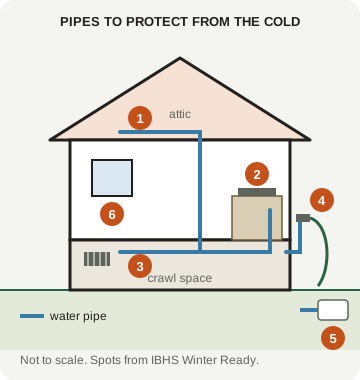
- Pipes in the attic.
- Pipes on walls that face outside, like a sink cabinet.
- Pipes in the crawl space.
- Outdoor faucets, and hoses left attached.
- Irrigation and pool systems.
- Gaps around doors and windows that let cold air in.
Before winter: steps you can do this week
- Insulate exposed pipes in the attic, the crawl space and along outside walls. Use pipe insulation made for the job, and wrap faucets in unheated spaces too [1].
- Take hoses off the house. Drain them and store them [1].
- Check your outdoor faucets. IBHS says homes built before 2010 usually do not have frost-proof outdoor faucets. If yours are not, shut off their valves and insulate them [1]. Our water site shows how to drain and cover an outdoor faucet.
- Shut down irrigation and pool systems for the winter [1].
- Seal the cold out. Caulk cracks and gaps on the outside of the house. Add weatherstripping to doors and windows. From inside, you should see no daylight around them [1].
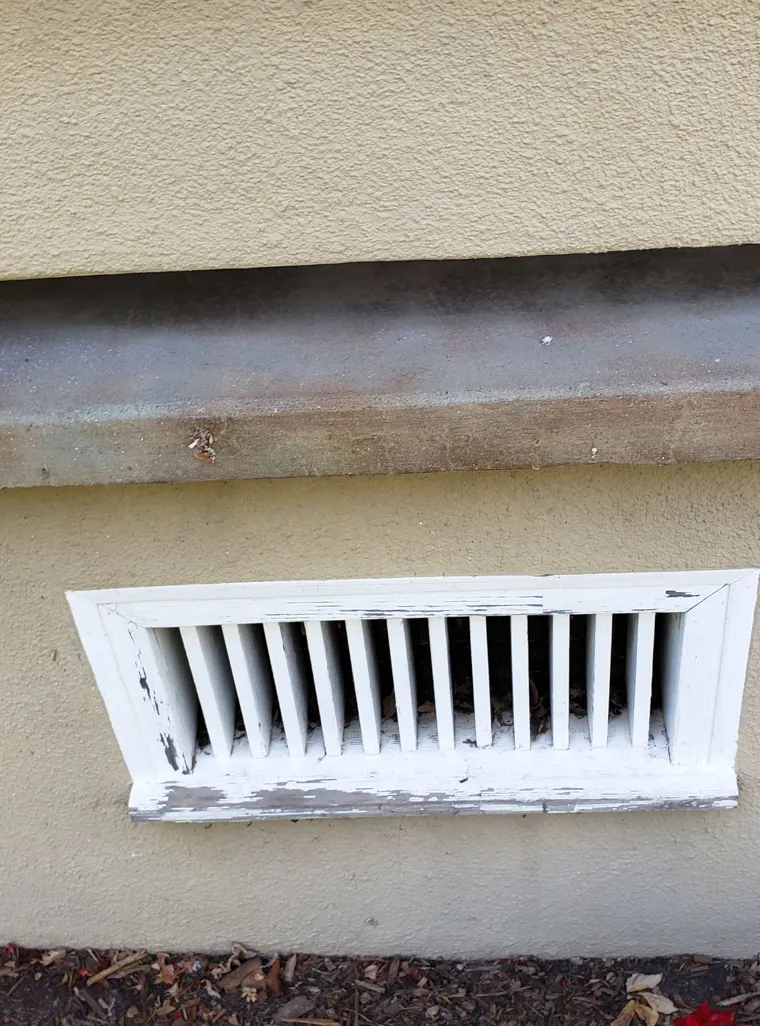
- Look at the crawl space. IBHS suggests covering ventilated crawl spaces during the winter months [1]. Those same openings let embers in during fire season, so read our ember-resistant vents guide before you change them.
- Find your main water shutoff and make sure it turns. Our tip: you want to know where it is before a pipe bursts, not after.
The night a freeze is forecast
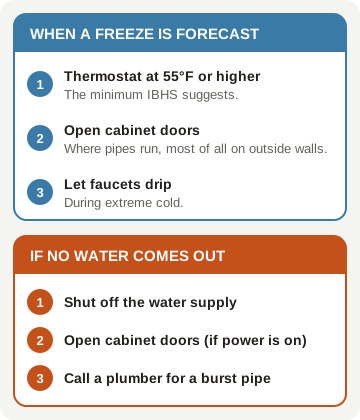
- Set the thermostat to 55°F or higher [2].
- Open cabinet doors where pipes run, most of all when the pipes are next to an outside wall [2].
- Let all faucets drip during extreme cold [2].
- Turn on phone alerts. A watch means be prepared. A warning means take action [2]. Sign up for SoCoAlert for county alerts [5].
If the power goes out in the cold
Winter storms can cut off heat and power [4]. Keeping the house warm is what protects the pipes, but do it safely.
- Never heat your home with a gas stove or oven [4].
- Run generators outdoors only, at least 20 feet from windows, doors and attached garages [4]. Never refuel one while it is hot [3].
- Have working carbon monoxide detectors on every level of the home [4].
More in our power outage checklist and the power station or generator guide.
If a pipe freezes or bursts
- No water from a faucet? Shut off the water supply [3].
- If you have power, open cabinet doors to warm the area [3].
- Call a plumber to repair any burst pipe [3].
- Photograph the damage. Make a list and take photos or video of what was damaged [3]. Our home inventory guide shows how.
- Call your insurance agent as soon as you can, and keep receipts for emergency costs [3]. Ask your agent what your policy covers.
- Get the water out fast. IBHS suggests a restoration service to remove water before mold starts [3].
Who this applies to
- Homes with a crawl space, an attic with pipes, or plumbing on outside walls.
- Older homes, which may not have frost-proof outdoor faucets [1].
- Homes with irrigation, a pool or outdoor faucets.
- Second homes and rentals that sit empty in winter.
Rules and advice change. For anything beyond these basics, ask a licensed plumber.
Related
- Power outage checklist
- Gutters and roof debris
- Prepare for high winds
- Winter storm checklist
- Home Ready Sonoma home
Sources
- IBHS: Winter Ready home, before winter (pipes, hoses, outdoor faucets, sealing, crawl spaces; read November 13, 2026)
- IBHS: Winter Ready home, before a winter weather event (thermostat, cabinet doors, dripping faucets, alerts; read November 13, 2026)
- IBHS: Winter Ready home, after a winter weather event (frozen and burst pipes, generators, documenting damage, insurer; read November 13, 2026)
- Ready.gov: Winter weather (heating safety, generators, carbon monoxide; read November 13, 2026)
- County of Sonoma: El Niño and Winter Storms (frost and freeze warnings, power outages, SoCoAlert; checked November 12, 2026)
- NOAA National Centers for Environmental Information: U.S. Climate Normals, 1991 to 2020 (Santa Rosa Sonoma County Airport: nights at or below 32°F and 20°F, by month and year; read November 14, 2026)
- International Code Council: Build It to Code to Minimize Damage from Frozen Water Pipes (ICC eNews, 2014, citing IBHS: unprotected pipes generally start to freeze at about 20°F; read November 14, 2026)