How to keep your house warm during a power outage
A Sonoma County guide for cold nights with no power: one warm room, safe heat, and when to get help.
The short answer
To keep your house warm during a power outage, heat one room and keep the cold out of it.
Close off the other rooms. Put towels in the gaps under doors. Close the curtains. Wear layers, hats and blankets [2].
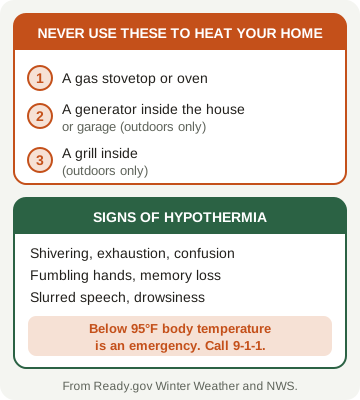
Never heat the house with a gas stovetop or oven. Run a generator or grill only outdoors [1].
If the house gets too cold to stay in, call 2-1-1 to ask about a warming center [6].
Why this matters this week
As of November 16, 2026, the National Weather Service Bay Area office had a Cold Weather Advisory out, with temperatures in the low to mid 30s. It forecast a stronger storm for Wednesday, November 18, with strong winds and widespread rain [8].
Winter storms can cut off heat and power [1]. When the power goes out, your energy provider decides when it comes back, not the County [7].
Check weather.gov/bayarea for the latest before you plan around a forecast.
Set up one warm room
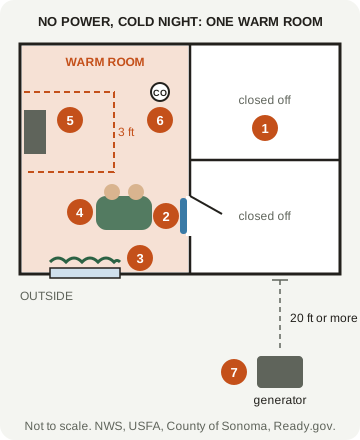
- Close off rooms you are not using [2].
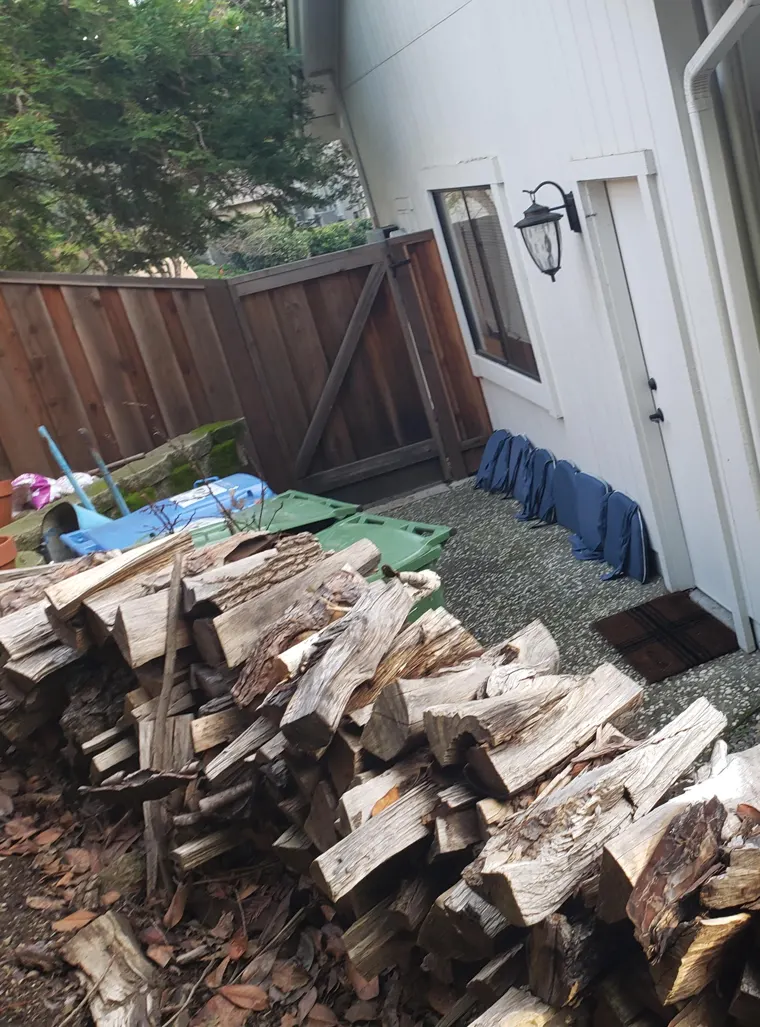
- Put towels or rags in the cracks under doors [2].
- Close blinds or curtains to keep in heat [2].
- Wear loose layers, hats and mittens, and use blankets [2].
- Keep anything that can burn at least 3 feet from a fireplace, wood stove or heater [3].
- Put a smoke alarm and a battery-operated carbon monoxide detector near the area you heat with a fireplace, wood stove or kerosene heater [5].
- Run a generator outdoors only, at least 20 feet from windows, doors and attached garages [1].
Our tip: pick the room before the storm. A room with a fireplace or wood stove, or with the fewest outside walls and windows, is a good start. Move bedding and supplies there while you still have light.
Heat it safely
- No gas stove or oven for heat. It is a carbon monoxide risk, and it can cause fires and burns [1].
- Generators and grills stay outside. Keep a generator at least 20 feet from windows, doors and attached garages. Let it cool before you refuel it [1]. The CDC says the same 20 feet, and adds vents [4].
- Fireplace or wood stove: vent all fuel-burning equipment to the outside, and keep a multipurpose dry-chemical fire extinguisher nearby [5].
- Keep 3 feet clear around every heat source, including fireplaces, wood stoves, space heaters and candles [3].
- Space heaters: turn them off when you leave the room or go to bed [3]. An electric one only runs if you have backup power, and it uses a lot of it. Our power station or generator guide shows how fast.
- Carbon monoxide has no color or smell [1]. You can't see, smell or hear it, so a working detector matters [4].
Steps you can do this week
- Test your smoke alarms and carbon monoxide detectors. Use ones with battery backup, with a CO detector on every level of the home [1]. The County says to test them monthly and change batteries twice a year [5].
- Seal drafts. Add weatherstripping and caulk around doors and windows [1][5].
- Get the chimney checked if a fireplace or wood stove is your backup heat. The County says once a year [5].
- Have the furnace and its vent checked by a qualified technician each winter [5]. Our tip: ask whether your heating system needs electricity to run, so you know before an outage.
- Stock several days of supplies: medicine, pet needs, and extra batteries for radios and flashlights [1]. Our power outage checklist has the full list.
- Put a thermometer where you will see it if anyone in the home is over 65, and check the indoor temperature often [5].
- Plan for pets. Bring them indoors in the cold [5].
- Sign up for alerts with SoCoAlert [7].
Can't afford heating costs? Ready.gov points to LIHEAP, a federal program that helps with energy bills and weatherization [1].
When it is too cold to stay home
The County lists warming centers on its Warming Centers page. Some open only when certain conditions are met, and space may be first come, first served [6].
For questions, call 2-1-1 or text your zip code to 898-211. For emergencies, call 9-1-1 or Sheriff Dispatch at (707) 565-2121 [6].
If you live alone, ask a family member or neighbor to check on you every day. Once your own household is safe, check on your neighbors [2].
Signs of hypothermia and what to do
Watch for shivering, exhaustion, confusion, fumbling hands, memory loss, slurred speech or drowsiness. A body temperature below 95°F is an emergency [1].
- Get medical help right away. Call 9-1-1 first [2].
- Move the person to a warm room and warm the center of the body first: chest, neck, head and groin [1].
- Keep them dry and wrapped in warm blankets, head and neck included [1].
- Be gentle. Don't rub the person or handle them roughly [2].
Older adults, young children and people with chronic illness are at higher risk in the cold [7].
Who this applies to
- Any Sonoma County home that loses power on a cold night.
- Homes with older adults, young children, or anyone with a chronic illness [7].
- Homes that plan to use a fireplace, wood stove or generator for backup heat or power.
- People who live alone.
While you keep the room warm, protect the rest of the house too: see how to protect pipes from freezing and what to do with the food in your fridge.
Related
- Power outage checklist
- Power station or generator?
- Protect pipes from freezing
- Prepare for high winds
- Home Ready Sonoma home
Sources
- Ready.gov: Winter weather (heating safety, generators, carbon monoxide detectors, supplies, LIHEAP, hypothermia; page updated November 3, 2026; read November 17, 2026)
- National Weather Service: Cold weather safety, during (power outage tips, checking on others, hypothermia; read November 17, 2026)
- U.S. Fire Administration: Heating fire safety (3 feet from heat sources, space heaters; read November 17, 2026)
- CDC: Prevent carbon monoxide poisoning (battery-operated CO detector, generators 20 feet from doors, windows and vents; reviewed August 25, 2026; read November 17, 2026)
- County of Sonoma: Preparing for extreme cold (home prep, chimney, extinguisher, detectors, thermometer, pets; read November 17, 2026)
- County of Sonoma: Warming centers (centers, 2-1-1, Sheriff Dispatch; read November 17, 2026)
- County of Sonoma: El Niño and Winter Storms (power outages, extreme cold risk groups, SoCoAlert; checked November 16, 2026)
- National Weather Service Bay Area (Cold Weather Advisory and the week's storm outlook; checked November 16, 2026)